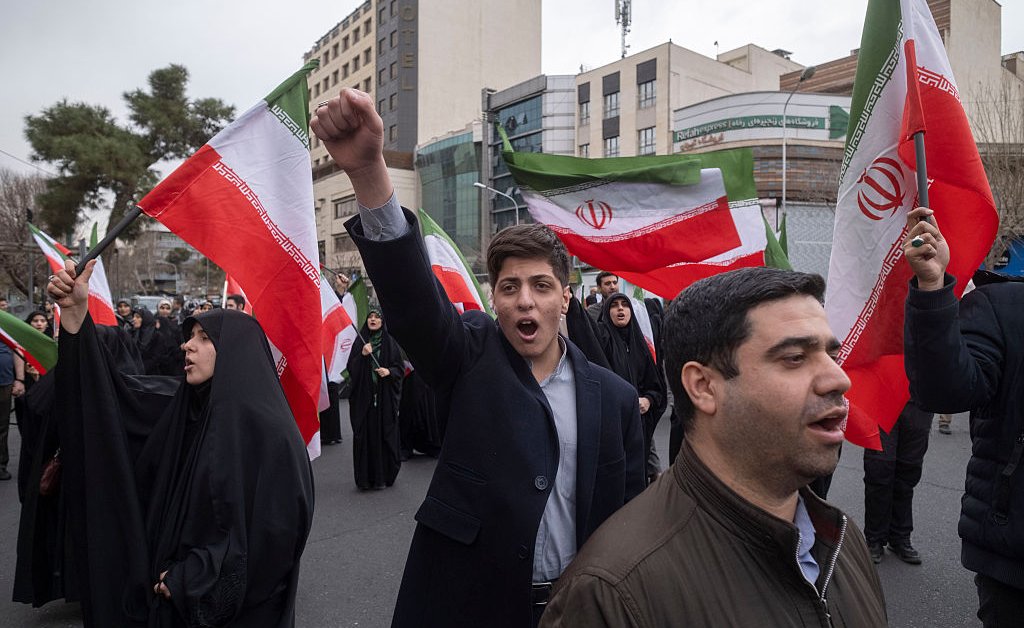
Iran Seeks Putin's Help Amidst US Aggression, Russia Steps In
The volatile geopolitical landscape of the Middle East has once again been rocked by significant developments, with Iran reportedly appealing directly to Russian President Vladimir Putin for assistance following a series of aggressive US military strikes. This escalation plunges the already strained relations between Washington and Tehran into a dangerous new phase, drawing Russia deeper into the fray and intensifying the
putin iran konflikt. Moscow, in a move that signals its unwavering commitment to its long-standing ally, has not only condemned the American actions in the strongest possible terms but has also pledged active support, warning of potentially catastrophic regional consequences.
The recent US-led airstrikes against Iranian nuclear sites have been met with fierce international condemnation from Moscow, highlighting the Kremlin's strategic opposition to what it perceives as unilateral aggression. These attacks, reportedly involving powerful 'bunker-buster' bombs targeting facilities at Fordow, Natanz, and Isfahan, have not only escalated fears of an all-out regional conflict but have also pushed Iran to seek robust external backing. Russia's immediate and unequivocal response underscores its pivotal role in challenging Western dominance in the region and its readiness to act as a counterweight to US and Israeli influence.
Russia's Stark Condemnation of US Strikes on Iran
Following the devastating US airstrikes on Iranian territory, Vladimir Putin broke his silence with a scathing assessment, labeling the military action an "unprovoked act of aggression" that utterly lacked "basis or justification." According to Russia's state TASS news agency, Putin's comments came during talks with Iran's Foreign Minister Abbas Araghchi, signaling a direct diplomatic engagement aimed at coordinating a response. The Russian leader's condemnation went further, with reports suggesting he characterized the nature and implications of the attacks as a "cynical murder" and a grave crime against "all human morality and international law." This extraordinary rhetoric reflects the depth of Russian anger and its perception of the US actions as an egregious violation of sovereignty and international norms.
The Russian Foreign Ministry in Moscow echoed Putin's sentiments, issuing a severe warning about the destabilizing impact of the US-Israeli air raids. It declared that Washington and Tel Aviv had "once again started a dangerous adventure that quickly brings the region to the brink of a humanitarian, economic, and – this cannot be ruled out – radiological catastrophe." This chilling prediction underscores the immense risks associated with targeting nuclear facilities, even if Iran maintains its program is for peaceful purposes. The ministry explicitly accused the "aggressors" of clear intentions: "To destroy the constitutional order and the government of a country that is undesirable to them and that refuses to submit to their dictates of violence and hegemonism."
Adding to the chorus of Russian condemnation, former President and current Deputy Chairman of Russia's Security Council, Dmitry Medvedev, lambasted US President Donald Trump. In a pointed message on Telegram, Medvedev wrote, "The peacemaker has once more shown his true face," suggesting that all diplomatic engagement with Iran under Trump was a mere facade. "All the talks with the Iran were just a cover-up. No one has ever doubted that. Nobody was interested in negotiating anything concrete," Medvedev asserted, reinforcing the Kremlin's view of US foreign policy as disingenuous and aggressive. For a deeper dive into Russia's official statements, you can read more about how
Putin Condemns US Iran Strikes, Warns of "Radiological Catastrophe" and how the
Kremlin Accuses US of Destabilizing Iran's Government and Order.
The Geopolitical Chessboard: Why Iran Appeals to Putin
Iran's urgent appeal to Vladimir Putin is not merely a cry for help but a calculated move within a complex geopolitical chessboard. Decades of strained relations with the United States, exacerbated by the Trump administration's unilateral withdrawal from the Joint Comprehensive Plan of Action (JCPOA) – the landmark nuclear deal – have pushed Tehran closer to Moscow. The US strikes, specifically targeting Iran's nuclear sites, come after years of escalating Iranian nuclear activities, including increasing uranium enrichment levels to 60 percent purity. While Iran insists its program is peaceful, this level significantly narrows the technical gap to weapons-grade material (90 percent) and has raised international alarm, providing a pretext for US intervention.
In this context, Russia emerges as a natural ally for Iran. Both nations share a profound distrust of US foreign policy, viewing it as a pursuit of hegemony that undermines sovereign states and international law. Iran's Supreme Leader Ayatollah Ali Khamenei reportedly penned a letter to Putin, directly requesting increased assistance – a significant diplomatic gesture underlining the gravity of the situation for Tehran. Foreign Minister Araghchi, ahead of his meeting with Putin, articulated this shared perspective, stating that Iran and Russia "have always had shared concerns, worries, and adversaries."
This strategic alignment is built on mutual interests:
- Counterbalancing US Influence: Both countries seek to diminish American power and influence in the Middle East and globally.
- Regional Stability (on their terms): Russia benefits from a strong, stable Iran that can act as a regional anchor and partner in various conflicts, such as in Syria.
- Economic and Military Ties: Russia is a crucial supplier of military hardware and technological expertise to Iran, and economic cooperation can circumvent Western sanctions.
For Iran, Russia represents a powerful diplomatic shield, a reliable security partner, and a critical voice on the international stage willing to challenge Western narratives and actions.
Russia's Strategic Interests and Active Support
Russia's decision to "step in" to assist Iran is deeply rooted in its own strategic interests and its vision for a multipolar world order. Far from being a benevolent act, Moscow's support for Tehran reinforces its position as a major power broker in the Middle East, challenging the traditional dominance of the United States. Putin's pledge that Russia is "making efforts to provide assistance to the Iranian people" hints at a multifaceted approach that could encompass diplomatic, military, and economic dimensions.
Diplomatically, Russia's vociferous condemnation of the US strikes provides Iran with crucial international backing, potentially mobilizing opposition to further US actions within the UN Security Council and other global forums. This diplomatic shield is invaluable for Iran, which often finds itself isolated on the world stage. Militarily, while the specifics remain undisclosed, Russian assistance could range from enhanced air defense systems to intelligence sharing and joint military exercises, aimed at deterring future aggression and bolstering Iran's defensive capabilities. Economically, Russia can help Iran circumvent Western sanctions through trade agreements, energy deals, and financial mechanisms that bypass the US dollar.
The
putin iran konflikt is thus more than just a reaction to US aggression; it's a reaffirmation of a strategic partnership designed to reshape regional dynamics. Russia sees Iran as a vital component in its broader strategy to reduce American influence and promote a new security architecture in the Middle East. This active engagement serves several key Russian objectives:
- Protecting its geopolitical investments in the region, particularly its alliance with Syria.
- Demonstrating its capacity as a reliable ally to other nations wary of US unilateralism.
- Gaining leverage in future negotiations with Western powers over regional and global issues.
The potential for a direct Russian intervention, even if primarily through support mechanisms, significantly raises the stakes of any future US or Israeli military action against Iran, making the regional situation incredibly precarious.
Escalation and the Shadow of a Wider Conflict
The US use of 30,000-pound 'bunker-buster' bombs against Iranian nuclear sites is a profound escalation, signaling a willingness to target critical infrastructure with overwhelming force. Such actions invariably heighten fears of an all-out regional conflict, drawing in various actors from proxy groups to state militaries. The Russian embassies in both Tehran and Tel Aviv immediately reacted to the crisis, advising their citizens to take precautions. The Russian Embassy in Tehran urged its nationals to leave Iran if possible, remain "vigilant," and avoid "military and government facilities." Similarly, the Russian Embassy in Tel Aviv called on Russian citizens in Israel to depart "until the situation normalizes," advising those who remain to be "vigilant" and adhere to local security instructions. These warnings underscore the severe risk of collateral damage and the potential for a rapid deterioration of security across the region.
The core of the
putin iran konflikt lies in its potential to ignite a broader conflagration. The deliberate targeting of nuclear facilities, even if described as pre-emptive or deterrent, carries immense risks, including the potential for radiological contamination, as warned by the Russian Foreign Ministry. Beyond the immediate physical damage, such strikes undermine international norms of sovereignty and the fragile framework of international law, creating a dangerous precedent for future interventions. The ripple effects could destabilize global energy markets, trigger refugee crises, and potentially lead to a direct confrontation between major powers, given Russia's declared commitment to assist Iran.
Conclusion
The recent developments, with Iran explicitly seeking President Putin's help and Russia stepping in with strong condemnations and pledges of assistance, mark a perilous turn in the ongoing Middle East crisis. The "unprovoked aggression" of the US strikes, as characterized by Russia, has not only intensified the
putin iran konflikt but has also solidified the strategic partnership between Tehran and Moscow, positioning Russia as a formidable counterweight to Western influence. The stakes are higher than ever, with warnings of a "radiological catastrophe" and the explicit intention to destabilize a sovereign nation’s government painting a grim picture. As the region teeters on the brink, the world watches anxiously, understanding that the choices made by these global powers will shape the future of international relations and potentially determine the fate of millions. The intervention of Russia transforms a bilateral US-Iran standoff into a complex geopolitical confrontation with far-reaching global implications, demanding careful diplomatic navigation to prevent further escalation into an even wider, more devastating conflict.